
5 tips for choosing your first overnight hike
Picking your first multi-day hike can feel like a pretty big decision - but with the right preparation (and a few lessons from those who’ve learned the hard way), you’ll hopefully be itching to plan your next adventure before you’ve even finished your first one!
I recently ignored my own advice and set off on the Larapinta Trail after two years of not hiking - without properly checking the track difficulty or estimated walking times. The result? An overloaded pack (definitely not the hike for non-essentials), much longer days on foot than expected, and hotter conditions thanks to shoulder season. By day two, my body was already protesting, and by day six, I was limping along on crutches thanks to one very unhappy knee.
To save you from the same fate, here are a few tried-and-tested tips for choosing your first successful multi-day hiking route, or, in my recent case, your first one back after a break. Ok read on for my 5 tips!!
1. Start with 1 Night / 2 Days
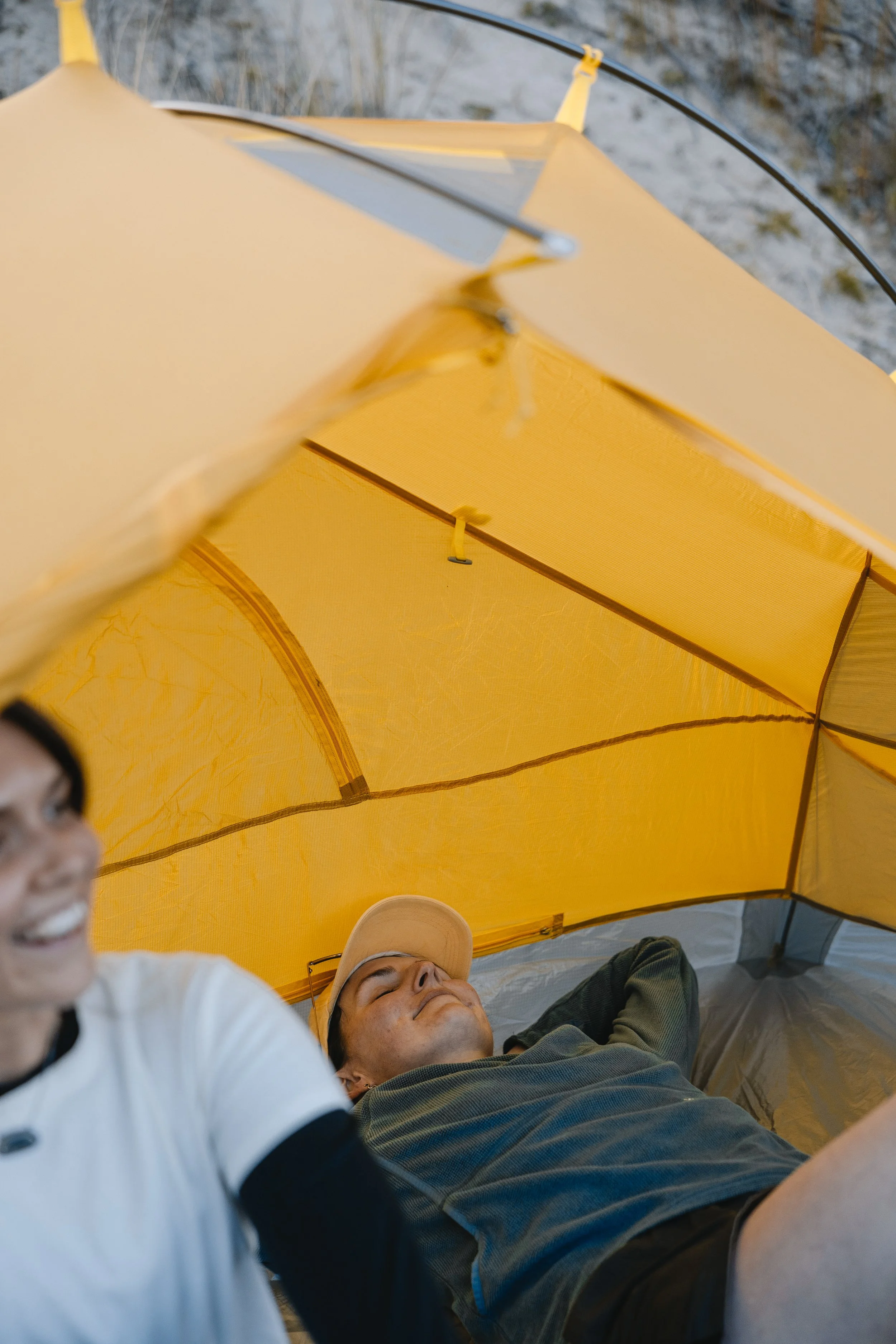
Ok, now we know it sounds short, but a 2 day hike will feel like a decent amount of time when you’re out on a trail. You’ll still get all the fun of hiking but with a lot less risk of anything going wrong - think blisters, overpacking or forgetting something essential (like your lighter or head torch)! Trust us, keeping your first few hikes on the shorter side of things will be worth it in the long haul.
2. Walk in Peak Season
It’s Peak Season for a reason! The weather during Peak Season is going to be the most manageable for that region; we’re talking not too hot, not too cold and usually, not too much rain.
The added benefit of Peak Season is that there’s likely to be lots of other hikers using the trail. When you’re new to hiking, it’s nice to have some friendly faces along the way who help you if you get lost, hurt or need something essential. On one of my first hikes, I hadn’t worn-in my hiking boots (they might have gone straight from the box to the trail) and let’s just say a new friend came to the rescue with some betadine and a pack of bandaids!
3. Use Walk Times, Not Kilometres
This one has caught me out more times than I care to admit, you’ve gotta look at the walk time of a trail, not just the kilometres. You might speed through your local 5km walking loop in under an hour, but just remember, it’s astonishing how much longer it can take you to walk with a pack on your back. A 5km hike with elevation and some tricky terrain could take you up to 3 hours.
This can also be very variable depending on the National Park or State you are walking in. For example, I find that Queensland is much more generous with the walk times than Tasmania which is often spot on. I definitely used to be competitive with trying to beat the suggested walk time but as my body ages (eeeek), and I find more joy in stopping for breaks and admiring the views, I’ve learned to lean into it.
For a fun first hike, I would recommend walking 4 hours each day. Setting up and packing up a tent always takes longer than anticipated and if you have extra time, bonus - you’ve now got time for a decent lunch break and a swim!
4. Check that your chosen track is regularly maintained
Now there’s nothing wrong with taking advice from a hiking blog written in 2002, but if you want to walk the incredible route they describe, just promise me you’ll check that the trail is still maintained. Hiking trails can quickly become unsafe to navigate if they haven’t been maintained.
This also applies to the access roads to the actual trail. I’ve found myself 2 hours down a forestry road, to find a trail I read about in the bottom of a blog from 1999, to realise the road is blocked by a huge fallen down tree that is now home to a family of possums. Not even making it to the trail head before you have to turn around is a real vibe kill.
5. The best advice? Do your first hike with Solo Season!!
Martina and I have used all these tips and tricks when planning the hikes for our Solo Season Adventures, and we’ll be sharing plenty more on the way! We’ve made sure the routes are hikable but most importantly that there is plenty of time for ocean dips, snack breaks, long lunches, and some side trip walks if we’re feeling up for that too!